ByJohn A
Essential Jewelry Pieces for Indian Wedding Celebrations
Indian weddings are known for their vibrant clothing, meaningful traditions, and carefully selected accessories. Among all the elements that contribute to a wedding look, jewelry holds a particularly important place. From the bride’s statement pieces to the subtle accessories worn by guests, jewelry helps complete traditional outfits while reflecting cultural heritage.
Choosing the right pieces can sometimes feel challenging because Indian wedding celebrations often include several events, each with its own style and level of formality. Understanding the role of different jewelry pieces can make it easier to create a coordinated and elegant appearance.
Why Jewelry Matters at Indian Weddings
Jewelry has been connected with Indian wedding traditions for generations. It is often selected not only for its beauty but also for its cultural and sentimental value. Families may preserve particular pieces for years and pass them from one generation to another.
Wedding jewelry can also reflect regional traditions. Different communities have their own preferences for designs, materials, colors, and ornaments. Despite these differences, jewelry remains a common element across many Indian wedding celebrations.
For brides, jewelry can become an important part of the overall bridal identity. For wedding guests, carefully chosen accessories provide an opportunity to embrace traditional fashion without copying the bride’s complete look.
Statement Earrings for a Traditional Look
Earrings are among the most noticeable accessories in wedding fashion. They frame the face and can influence the overall balance of an outfit.
Traditional earrings come in many shapes and sizes, making it possible to select a pair according to the outfit, hairstyle, and occasion. Larger designs can create a dramatic bridal appearance, while medium-sized pieces may be more suitable for wedding guests.
A classic Jhumka remains one of the most recognizable choices. Its bell-shaped silhouette and detailed design have made it a lasting part of South Asian jewelry traditions.
Jhumkas can work with sarees, lehengas, salwar suits, and other ethnic outfits. Their traditional character makes them particularly suitable for ceremonies where cultural styling plays an important role.
Selecting Earrings According to the Outfit
The neckline, embroidery, and overall detail of an outfit should influence the choice of earrings. A heavily decorated outfit may work better with earrings that define without creating too much visual competition.
For simpler clothing, statement earrings can introduce additional detail and make the outfit feel more complete.
Hair styling also matters. Updos can showcase larger earrings clearly, while open hairstyles may work well with designs that remain visible around the hair.
Bridal Necklaces and Layered Styles
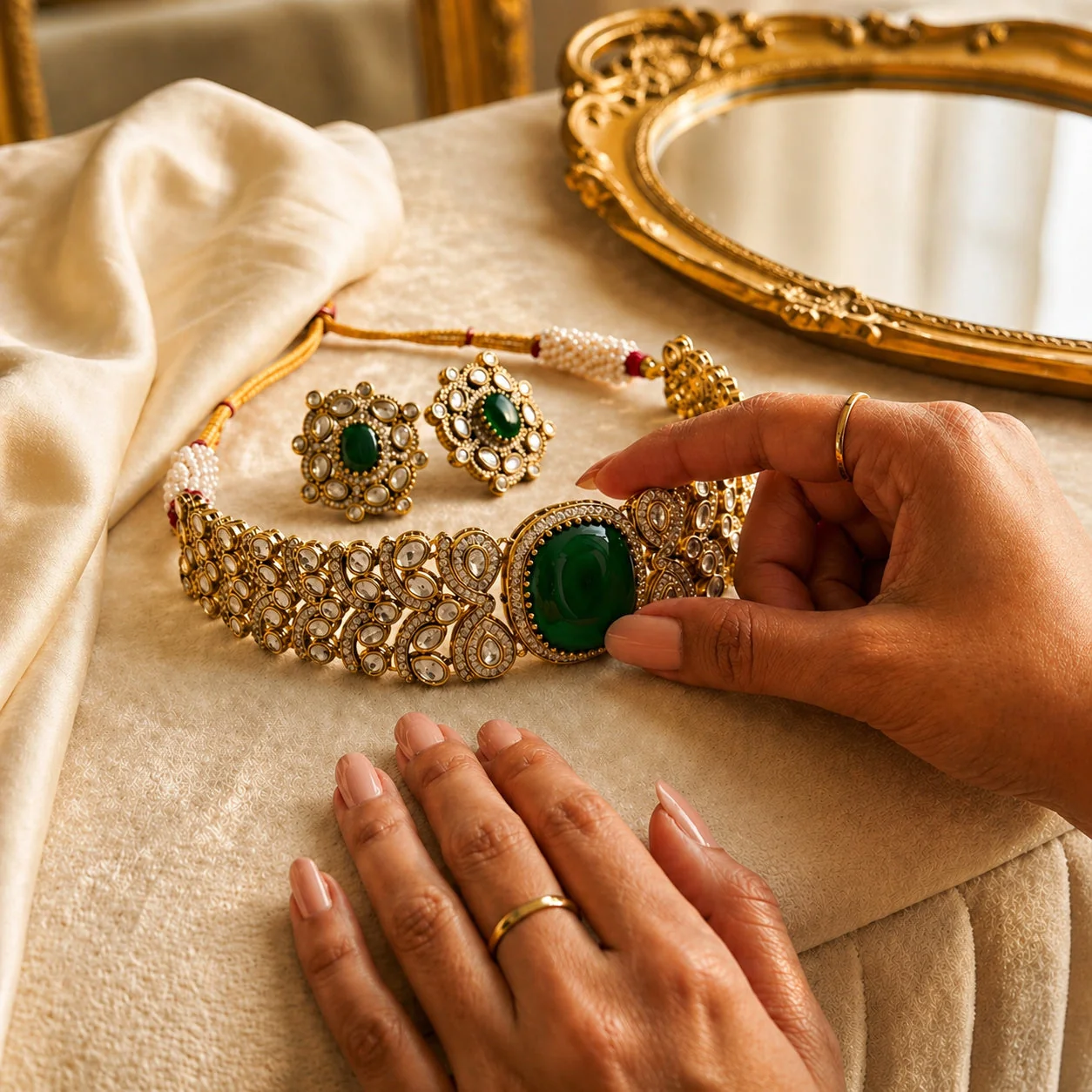
Necklaces are another major component of wedding jewelry. Brides often choose necklaces that complement the neckline and embroidery of their bridal outfits.
Layered necklaces can create a rich and traditional appearance, particularly when paired with elaborate wedding attire. A simpler necklace may be more appropriate when the outfit already contains extensive embroidery or embellishment.
Wedding guests can also wear necklaces, but choosing a lighter design can help maintain a sophisticated appearance without appearing overly bridal.
The Maang Tikka as a Bridal Essential
A traditional wedding look often includes a headpiece that draws attention toward the face. The Maang Tikka is one of the most recognizable examples.
Worn along the center parting of the hair, the maang tikka adds a graceful finishing touch to bridal styling. It can be found in a wide range of designs, from delicate pieces to elaborate styles that coordinate with larger jewelry sets.
Its popularity comes from both its visual appeal and cultural significance. When combined with earrings and a necklace, it can create a cohesive bridal jewelry arrangement.
Creating Balance With a Headpiece
A headpiece should complement the rest of the jewelry rather than compete with it. If earrings are particularly large, a more refined maang tikka may create better balance.
Similarly, an elaborate headpiece can become the focal point when the other accessories have simpler designs.
The best combination depends on the bride’s hairstyle, face shape, outfit, and personal preferences.
Bangles and Traditional Wrist Jewelry
Bangles have a long history in South Asian wedding traditions. They can add movement, color, and texture to a bridal outfit.
Many brides wear multiple bangles together, creating a layered appearance that complements embroidered sleeves and traditional fabrics. Colors can also be coordinated with the bridal outfit to create a consistent visual theme.
Wedding guests can choose fewer bangles or select a simpler bracelet when they want a more understated appearance.
Choosing Jewelry for Different Wedding Events
Indian weddings often involve multiple events, including engagement ceremonies, mehndi celebrations, sangeet functions, the wedding ceremony, and receptions.
Each event provides an opportunity to create a different jewelry combination.
For a daytime mehndi event, lighter earrings and colorful accessories can create a relaxed festive appearance. A sangeet may allow for more expressive statement jewelry, while the main wedding ceremony often calls for more traditional and elaborate pieces.
The reception may provide an opportunity to introduce contemporary jewelry designs while maintaining an elegant connection to traditional fashion.
Matching Jewelry With Bridal Fashion
Jewelry should work alongside the outfit rather than overpower it. Color coordination, proportions, and design details all influence the final appearance.
Gold-toned pieces often complement warm bridal colors, while silver-toned or lighter pieces can work well with cooler shades and pastel outfits.
The embroidery pattern can also provide useful inspiration. Jewelry containing similar motifs or details can create visual continuity throughout the look.
At the same time, contrasting jewelry can create an interesting focal point when selected carefully.
Considering Comfort and Quality
Wedding celebrations can last for many hours, so comfort should never be overlooked. Heavy necklaces, earrings, or bangles can become difficult to wear throughout a long ceremony.
Quality craftsmanship can make a significant difference in the overall experience. Secure clasps, comfortable earring backs, and well-finished surfaces help ensure that jewelry remains practical during extended celebrations.
Choosing pieces that balance appearance and comfort allows the wearer to enjoy the event without constantly adjusting their accessories.
See also: How Wholesale Blank T-Shirts Support Print-on-Demand Businesses
Preserving Traditional Jewelry for Future Generations
One of the most meaningful aspects of wedding jewelry is its potential to become a family keepsake. Jewelry purchased for a wedding may later be worn by siblings, children, or future generations.
Proper storage and careful handling can help preserve these pieces. Keeping jewelry away from moisture, harsh chemicals, and unnecessary friction can help maintain its appearance over time.
This practice transforms jewelry from a temporary fashion choice into something with lasting sentimental value.
Finding Traditional Jewelry for Modern Weddings
Modern brides increasingly look for jewelry that respects cultural traditions while fitting contemporary preferences. This has encouraged jewelry brands to offer designs that combine familiar traditional elements with updated styling.
Jida Jewels offers jewelry inspired by South Asian traditions, providing options for people looking to incorporate cultural details into modern wedding and festive looks.
For those exploring traditional and bridal-inspired designs, offers a selection of jewelry styles suited to different celebrations and personal preferences.
Conclusion
Jewelry remains one of the most important elements of Indian wedding fashion. From statement earrings and necklaces to bangles and the traditional Maang Tikka, each piece can contribute to a meaningful and coordinated appearance.
The best wedding jewelry balances cultural significance, personal style, comfort, and the requirements of the occasion. Whether preparing for a bridal ceremony or attending a family celebration, thoughtfully selected jewelry can honor tradition while creating a timeless and memorable look.