ByJohn A
What Is a Precision Chamfering Machine? A Beginner’s Guide to How They Work and Where They Are Used
In metalworking, the end of a bar or tube often needs some preparation before it can move to the next manufacturing step. A sharp edge may need to be removed. The end may need a specific angle. A bar may need to fit into a collet, bar feeder, or another machine more easily.
A precision chamfering machine is designed to perform these types of operations accurately and repeatedly.
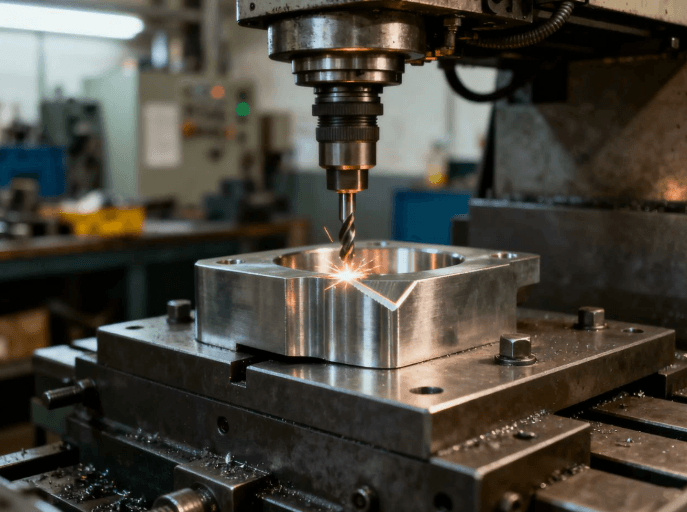
In simple terms, the machine removes material from the edge or end of a workpiece to create a controlled shape. Depending on the tooling and machine configuration, chamfering equipment can also perform operations such as facing, turning, center drilling, and preparing the inside and outside edges of tubing.
For manufacturers processing substantial amounts of bar stock, these machines can provide a more controlled alternative to preparing every piece manually with grinders, hand tools, or general-purpose machine tools.
What Does Chamfering Mean?
A chamfer is simply an angled surface created where 2 surfaces would otherwise meet at a sharp corner.
Imagine a round steel bar that has just been cut to length. Instead of leaving a sharp 90-degree edge around the end, a machine can remove a small amount of material around that edge.
The result is a beveled or angled edge.
Chamfers can be very small when the goal is simply removing a burr, or they can be deeper and more precisely controlled when the shape serves a specific manufacturing purpose.
Chamfering should not be confused with rounding an edge. A radius creates a curved transition, while a traditional chamfer creates a straight, angled surface.
How Does a Precision Chamfering Machine Work?
The basic process is relatively straightforward.
The operator or automated material-handling system positions the bar or part in the machine. The workpiece is held in the required location, and a cutting tool removes material from the end.
Some bar chamfering systems are designed so that the cutting head rotates while the bar remains stationary. That can be useful when working with long material because the entire bar does not have to spin during the operation.
The exact process depends on the machine, but a typical sequence may look like this:
- The bar is loaded into position.
- The machine locates or stops the material at the required point.
- The workpiece is secured.
- The cutting tool moves into the material.
- The chamfer or other end preparation is produced.
- The tool retracts.
- The finished bar is removed or transferred to the next operation.
On automated machines, much or all of this sequence can occur without an operator manually performing each step.
Why Is Precision Important?
It is possible to remove a sharp edge with a hand grinder. That does not mean the result will be the same from part to part.
Precision chamfering becomes important when the dimensions, angle, concentricity, or repeatability of the end preparation affect what happens next.
Consider a shop processing hundreds of bars.
If every operator manually grinds each bar, one chamfer may be slightly deeper than another. The angle may change. Material removal may be uneven.
A purpose-built machine controls the cutting process much more consistently.
That repeatability becomes increasingly important when the prepared bar must interact with other manufacturing equipment.
What Are Precision Chamfering Machines Used For?
Chamfering equipment can serve several purposes beyond simply making the end of a bar look cleaner.
1. Removing Burrs and Sharp Edges
One of the simplest uses is deburring.
Sawing or cutting bar stock can leave sharp edges and burrs. Those edges can create handling problems, interfere with subsequent operations, or simply produce an unfinished part.
Instead of manually grinding each end, a chamfering machine can create a consistent edge around the material.
This can be especially useful when a shop processes the same types of bars repeatedly.
2. Preparing Bar Stock for Bar Feeders
Bar feeders are commonly used to supply material automatically to CNC lathes.
The end of the bar can affect how smoothly that material enters the feeding system or associated collet.
Chamfering the leading edge provides a controlled transition instead of forcing a sharp-edged bar into the system. In some applications, the outside diameter near the end of the bar may also need to be turned down before the bar enters a collet-style feeding system.
This is why chamfering equipment is often part of a larger bar-preparation process rather than a completely isolated operation.
3. Weld Preparation
Chamfers can also be used when preparing material for welding.
Removing material at a controlled angle can create space for the weld and help establish the joint geometry required by the fabrication process.
The appropriate preparation depends on the material, thickness, welding procedure, joint design, and applicable requirements, so there is no single chamfer that works for every welding application.
4. Facing Bar Ends
Sometimes the issue is not the edge but the entire end of the workpiece.
A facing operation removes material across the end to create the required surface.
Some precision chamfering machines can use tooling that faces and chamfers the workpiece as part of the same general end-preparation process.
This can reduce the need to move material to another machine simply to prepare the end.
5. Turning and Chamfering
A machine may also be configured to reduce the diameter of a short section at the end of the bar before creating the chamfer.
This is generally known as turning and chamfering.
One common reason is to prepare bar stock for manufacturing equipment that requires the end to fit within a particular feeding or gripping arrangement.
6. Preparing Tubing
Tubing presents another set of requirements because there are 2 edges to consider: the outside diameter and the inside diameter.
Depending on the application and tooling, a chamfering machine can prepare the ID, OD, and face of a tube.
This can be useful when preparing tubing for assembly, fabrication, welding, or additional machining.
7. Center Drilling and Other End Operations
The term “chamfering machine” can actually understate what some equipment can do.
With appropriate tooling, certain machines can perform center drilling and other bar-end operations. More specialized automated systems may also be engineered around additional operations required by a particular manufacturing process.
The key is to think of the equipment as bar-end preparation machinery, not only as a way to cut one angled edge.
See also: How Advanced Packaging Technology Helps Extend Snack Product Shelf Life
What Materials Can Be Chamfered?
Precision chamfering machines are used with a range of metals.
Applications may involve materials such as:
- Carbon and mild steels
- Stainless steel
- Aluminum
- Brass
- Bronze
- Titanium
- Nickel-based alloys such as Inconel
The ability to machine a particular material does not mean every machine, cutting insert, speed, or feed setting will work equally well.
Material hardness, diameter, shape, required depth of cut, tooling, and production volume all affect how the application should be approached.
JF Berns, for example, lists applications involving steel, stainless steel, titanium, Inconel, aluminum, brass, bronze, and other materials across its precision bar chamfering equipment.
Can Chamfering Machines Handle Shapes Other Than Round Bar?
Yes.
Although round bar is a common application, some machines can also process hexagonal and square stock, along with tubing and other configurations when the equipment and tooling are designed for the application.
Non-round material introduces additional considerations because the cutting tool encounters an interrupted surface rather than a continuously round outside diameter.
This makes machine rigidity, workholding, tooling, and application engineering particularly important.
Manual vs. Semi-Automatic vs. Fully Automatic Chamfering Machines
Not every manufacturer needs the same level of automation.
Chamfering equipment generally ranges from manually loaded machines to highly automated production systems.
Manual Chamfering Machines
A manual machine is typically appropriate when an operator can load and position each bar without creating a production bottleneck.
These machines can make sense for:
- Lower production volumes
- Frequent changes between jobs
- Maintenance departments
- Job shops
- Applications with many different bar sizes
- Manufacturers replacing manual grinding or general-purpose machining
“Manual” does not mean the chamfer itself has to be imprecise. It primarily refers to how material is handled and the machine cycle is initiated.
Semi-Automatic Chamfering Machines
Semi-automatic equipment adds automation to portions of the process.
For example, an operator may place the material into position while the machine automatically detects, clamps, machines, and releases it.
This can improve repeatability and throughput without requiring a completely automated material-handling system.
Fully Automatic Chamfering Machines
At higher production volumes, the economics begin to change.
A fully automatic system can be designed to feed bars into the machine, complete the required end preparation, and transfer or accumulate finished material.
Some systems can also be integrated with upstream and downstream equipment, turning chamfering into one operation within a larger automated manufacturing cell.
Automation is particularly worth evaluating when operators spend substantial time repeatedly loading, chamfering, unloading, and moving identical material.
Single-Ended vs. Double-Ended Chamfering
Another important distinction is whether one or both ends need preparation.
A single-ended chamfering process machines one end of the material at a time.
A double-ended system is designed around applications where both ends need to be processed.
Which makes more sense depends on factors including production volume, bar length, required operations, material handling, and whether both ends require the same preparation.
Automated equipment can be built specifically around single- or double-ended bar-processing requirements.
When Does a Dedicated Chamfering Machine Make Sense?
A manufacturer does not necessarily need specialized chamfering equipment simply because an occasional bar requires an angled edge.
A dedicated machine becomes more relevant when end preparation turns into a repeatable production requirement.
That may happen when:
- Employees spend significant time manually deburring bars.
- Chamfers need to remain consistent from piece to piece.
- Bar ends must be prepared for automated feeding equipment.
- Multiple end-preparation operations are required.
- Long bars are inconvenient to load into conventional machine tools.
- Production volume makes manual preparation inefficient.
- Bar preparation is delaying downstream CNC equipment.
- The operation is a candidate for automation.
The business case is therefore broader than the chamfer itself.
Manufacturers should consider how material preparation affects labor, handling, machine utilization, consistency, safety, and the rest of the production process.
What Should You Know Before Selecting a Chamfering Machine?
A machine should be selected around the application rather than simply choosing a model and hoping the work fits it.
Before discussing equipment with a manufacturer, gather information about:
- Minimum and maximum bar diameter
- Bar length
- Material type and grade
- Material hardness, when relevant
- Round, square, hex, tubing, or other shapes
- Required chamfer angle
- Chamfer depth
- Whether facing is required
- Whether turning is required
- Inside- or outside-diameter tube preparation
- Drilling or center-drilling requirements
- Required tolerances
- Number of pieces processed
- Desired production rate
- Current method of preparing the material
- Upstream and downstream equipment
- Whether automatic loading or unloading is needed
These are also the types of application details requested by chamfering-equipment manufacturers when evaluating a new system.
The more clearly the manufacturing process is defined, the easier it becomes to determine whether a manual, semi-automatic, or fully automated solution makes sense.
Precision Chamfering Is Really About Better Bar Preparation
For someone encountering this equipment for the first time, a precision chamfering machine can sound highly specialized.
The basic idea is much simpler.
It is a machine designed to prepare the ends of bars, tubes, and other workpieces in a controlled and repeatable way.
That may mean removing a sharp edge. It could mean creating a specific chamfer for a bar feeder, preparing material for welding, facing an end, turning down a section of bar, or preparing the inside and outside edges of tubing.
Manufacturers such as JF Berns, which designs manual, semi-automatic, and fully automatic precision bar chamfering equipment, illustrate how broad the category has become. Modern machines can be engineered not only around the cutting operation but also around tooling, material handling, loading, unloading, and integration with other manufacturing equipment.
For manufacturers beginning to evaluate chamfering equipment, the best starting point is not a particular machine model. It is the application.
Define the material, dimensions, required end preparation, production volume, and what happens to the bar before and after chamfering. From there, it becomes much easier to determine the appropriate level of precision, tooling, workholding, and automation.